
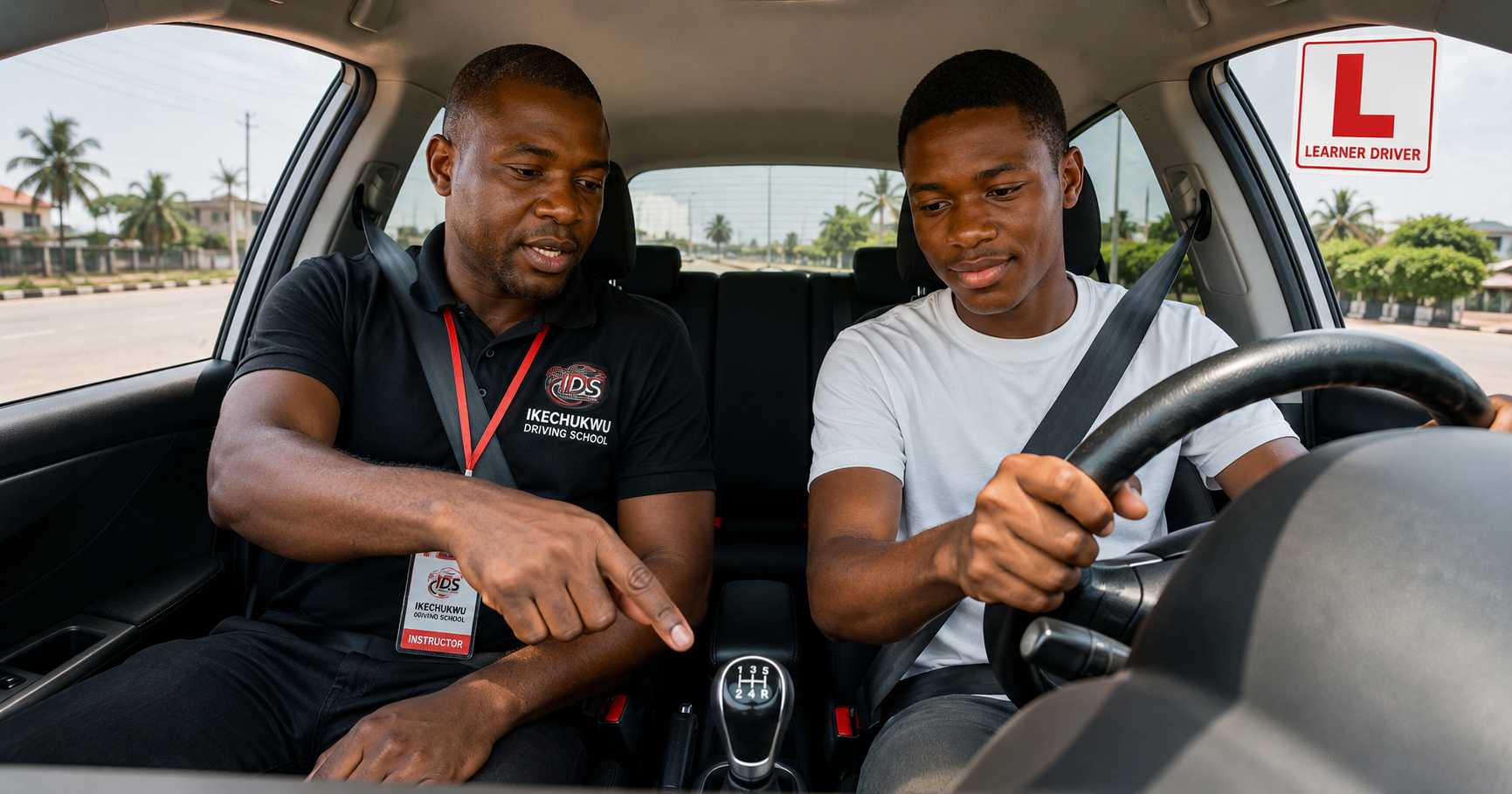
Learning how to drive a manual car is an important skill that gives you more control over your vehicle and makes you a more confident driver. In Nigeria, every new driver should also understand road safety rules and traffic regulations recommended by the Federal Road Safety Corps (FRSC) before driving on public roads. Unlike automatic vehicles, manual transmission cars require you to coordinate the clutch, gear lever, and accelerator at the same time. It’s normal for beginners to stall the engine, struggle with hill starts, or feel overwhelmed by the number of tasks involved. The good news is that every experienced driver started exactly where you are today.
Driving a manual car is a valuable skill that gives you greater control over your vehicle and prepares you to drive a wider range of cars. In Nigeria, many vehicles on the road still use manual transmission, making it an important skill for new drivers to learn. With the right guidance, consistent practice, and a focus on road safety, you can become a confident manual driver in a relatively short time.
This guide explains how to drive a manual car step by step, highlights common mistakes beginners make, and shares practical tips to help you master manual driving safely. Whether you’re preparing for your first driving lesson or getting ready for your driving test, this article will help you build confidence behind the wheel.
What Is a Manual Car and Why Should You Learn How to Drive a Manual Car?
A manual car, also known as a stick-shift vehicle, requires the driver to change gears manually using a gear lever and clutch pedal. Unlike an automatic car, the driver decides when to shift gears depending on the vehicle’s speed and engine performance.
A manual transmission vehicle has three pedals:
- Clutch (left pedal)
- Brake (middle pedal)
- Accelerator (right pedal)
Learning how these three pedals work together is the foundation of driving a manual car successfully.
Why Learning How to Drive a Manual Car Is Worth It
Although driving a manual vehicle requires more practice, it offers several advantages.
Some of the benefits include:
- Better control of the vehicle
- Improved understanding of how cars operate
- Easier adaptation to different vehicle types
- Better preparation for driving commercial vehicles
- Greater confidence when driving in different road conditions
For many first-time drivers in Nigeria, learning manual transmission first makes transitioning to automatic vehicles much easier later.
Understanding the Controls Before You Drive a Manual Car
Before starting the engine, take time to become familiar with the controls.
Using the Clutch Correctly When Learning How to Drive a Manual Car
The clutch temporarily disconnects the engine from the wheels, allowing you to change gears smoothly.
Brake Pedal
The brake slows or stops the vehicle.
Accelerator
The accelerator controls the vehicle’s speed by increasing engine power.
Gear Lever
Most manual vehicles have five forward gears and one reverse gear. Each gear is designed for different speed ranges.
Step-by-Step Guide on How to Drive a Manual Car

Step 1: Adjust Your Driving Position
Before starting the engine:
- Adjust your seat.
- Adjust your mirrors.
- Fasten your seat belt.
- Ensure you can comfortably press the clutch pedal fully.
A comfortable driving position improves both safety and confidence.
Step 2: How to Start a Manual Car Without Stalling
Follow these steps:
- Press the clutch pedal fully.
- Make sure the gear lever is in Neutral.
- Turn the ignition key or press the Start button.
- Keep your foot on the clutch.
Never start moving until you understand your surroundings.
Step 3: Engage First Gear
With the clutch still fully pressed:
- Move the gear lever into First Gear.
- Release the handbrake when ready to move.
This prepares the vehicle for movement.
Step 4: Find the Clutch Biting Point
One of the most important skills when learning how to drive a manual car is finding the clutch’s biting point.
Slowly release the clutch until you feel:
- The car slightly vibrate.
- The front of the vehicle lift gently.
- The engine begin to engage.
This is called the biting point.
Do not rush this stage.
Step 5: How to Move Off Smoothly in a Manual Car
As you slowly release the clutch:
- Gently press the accelerator.
- Continue releasing the clutch smoothly.
- The car should begin moving without stalling.
Smooth coordination between the clutch and accelerator comes with practice.
Step 6: How to Change Gears Smoothly in a Manual Car
As your speed increases:
- Press the clutch.
- Move to the next gear.
- Release the clutch smoothly.
- Apply gentle acceleration.
Generally:
- First Gear – Starting
- Second Gear – Low speed
- Third Gear – Moderate speed
- Fourth Gear – Faster driving
- Fifth Gear – Highway speeds
Step 7: Slow Down Safely
When slowing:
- Release the accelerator.
- Press the brake gently.
- Press the clutch before the engine begins struggling.
- Shift into a lower gear if necessary.
This prevents the engine from stalling.
Step 8: How to Stop a Manual Car Safely
To stop safely:
- Press the brake.
- Press the clutch fully.
- Shift into Neutral.
- Apply the handbrake.
Always secure the vehicle before leaving it.
Common Mistakes When Learning How to Drive a Manual Car
Every beginner makes mistakes while learning. The key is to learn from them.
Some common mistakes include:
- Releasing the clutch too quickly
- Pressing the accelerator too hard
- Looking at the gear lever while driving
- Forgetting to check mirrors
- Riding the clutch
- Panicking after stalling
- Skipping safety observations
Remember, stalling occasionally is a normal part of learning.
How to Drive a Manual Car with Confidence on Nigerian Roads
Confidence grows through regular practice.
Here are practical tips that can help:
- Practice in quiet areas before driving on busy roads.
- Learn one skill at a time.
- Focus on smooth clutch control.
- Stay calm after making mistakes.
- Practice hill starts gradually.
- Drive regularly to build muscle memory.
- Always obey road signs and traffic rules.
Consistency is far more important than speed.
Road Safety Habits Every Manual Driver Should Develop
Road safety should always come before speed. Always obey traffic signs, wear your seatbelt, and remain alert to your surroundings. The World Health Organization (WHO) identifies proper driver education and safe driving habits as key measures for reducing road traffic injuries worldwide.
Safe drivers also:
- Wear seat belts.
- Observe speed limits.
- Maintain safe following distances.
- Avoid distractions.
- Check mirrors frequently.
- Signal before changing lanes.
- Stay alert in heavy traffic.
- Respect pedestrians and other road users.
These habits reduce accidents and improve driving confidence.
Preparing for Your Driving Test
Before taking your driving test, make sure you understand road signs, defensive driving, and the practical assessment. You can also review official driving and licensing information provided by the Federal Road Safety Corps (FRSC).
Before your test, ensure you can confidently:
- Start the vehicle smoothly
- Change gears correctly
- Perform hill starts
- Reverse safely
- Park accurately
- Obey road signs
- Complete emergency stops
- Drive confidently in traffic
Professional driving instruction can help you identify areas that need improvement before your test day.
Why Professional Driving Lessons Make Learning Easier
While some people learn from friends or family, professional instruction often leads to faster and safer progress.
Qualified instructors can:
- Correct bad driving habits early.
- Teach proper clutch control techniques.
- Explain Nigerian road regulations.
- Prepare you for the driving test.
- Build your confidence through structured practical lessons.
At Ikechukwu Driving School, beginners receive practical, hands-on training designed to help them become safe, confident, and road-ready drivers. With experienced instructors, flexible training schedules, and personalized guidance, learners can build their driving skills step by step while developing good road safety habits that last a lifetime.
Frequently Asked Questions
Is driving a manual car difficult?
It may seem challenging initially, but with consistent practice and proper instruction, most learners become comfortable within a few weeks.
Why does my manual car keep stalling?
Stalling usually happens because the clutch is released too quickly or there isn’t enough acceleration. Practicing clutch control will greatly reduce this problem.
Should I learn manual before automatic?
Learning manual first gives you the flexibility to drive both manual and automatic vehicles, making you a more versatile driver.
How long does it take to learn manual driving?
The learning period varies depending on the individual, but regular practice combined with professional instruction can significantly speed up the process.
Final Thoughts
Learning how to drive a manual car is a valuable investment in your independence, safety, and confidence as a driver. Although the first few lessons may feel challenging, every successful driver once faced the same learning curve. By understanding the controls, practicing consistently, and developing safe driving habits, you’ll gradually gain the skills needed to drive confidently in different road conditions.
If you’re looking for structured guidance, practical lessons, and experienced instructors, Our Professional Driving Lessons provides beginner-friendly training designed to help new drivers become road-ready. With the right support and regular practice, you’ll not only learn how to operate a manual car but also develop the confidence and safety awareness needed to enjoy driving for years to come.